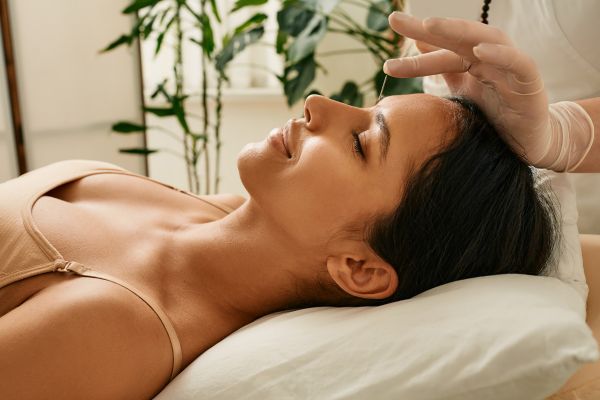
What Happens At An Acupuncture Appointment?
If you’ve never had acupuncture before, you may have a lot of questions about what actually happens during a treatment. Will the needles hurt? How many needles will be used? Where will they go? Do you have to undress? What are you supposed to do while the needles are in? And perhaps the biggest question of all: What is acupuncture actually doing? These are all very reasonable questions.
Many people come to their first appointment expecting acupuncture to feel like an uncomfortable medical procedure. In reality, acupuncture treatments are often a quiet, restorative experience. Patients frequently relax deeply enough to have a light nap while the needles are in place.
So, if you’re considering acupuncture but aren’t quite sure what to expect, here’s what happens during a typical acupuncture treatment at Wellness Wisdom.
What should you do before an acupuncture appointment?
There's no complicated preparation required. A few simple recommendations can make your treatment more comfortable:
It's best not to arrive on an empty stomach feeling very hungry. If you are coming for a morning appointment, it's best to not skip breakfast before coming.
Avoid alcohol, cannabis, and other recreational drugs before treatment.
You don't need to arrive in special clothing. If clothing needs to be removed to access an acupuncture point, you'll be given a blanket or sheet to cover yourself with.
And most importantly, tell your acupuncturist about your health circumstances and anything that may affect your treatment.
At your first appointment, I complete a thorough health assessment. Treatments can then be modified appropriately for circumstances such as pregnancy, mobility limitations, or anxiety.
What happens during your first acupuncture appointment?
At Wellness Wisdom, initial acupuncture appointments are approximately 75 minutes, while follow-up appointments are generally around 45 minutes. The first appointment allows time to understand not only the symptoms that brought you in, but also the larger picture of your health.
I begin by reviewing your intake form with you. I want to understand when your symptoms began, what influences them, what makes them better or worse, and whatever other factors may be relevant. This is important because acupuncture treatment isn't simply about treating a symptom in isolation.
From the perspective of Traditional Chinese Medicine (TCM), symptoms are understood within a larger pattern of disharmony. Your symptoms, health history, lifestyle, and other information gathered during your assessment all contribute to developing your individual TCM diagnosis. I also examine your tongue and feel your pulses. These are traditional diagnostic techniques that provide additional information that helps me understand your overall health picture and determine the most appropriate treatment. Once I've completed the assessment, I'll explain my recommendations and answer any questions you have before we begin.
Does acupuncture hurt?
This is probably one of the most common concerns people have before their first treatment. The short answer is: acupuncture needles are very fine, and most people find the experience much more comfortable than they expect.
Acupuncture needles are considerably thinner than the hypodermic needles used for injections or blood draws. The difference in diameter is substantial—depending on the type and size of needles being compared, many acupuncture needles can fit within the shaft of a hypodermic needle.
When I insert an acupuncture needle, you may feel little or nothing at all. Sometimes there is a sensation similar to a tiny mosquito bite. You may also experience a mild aching, distending, or occasionally a brief, small cramping sensation. These sensations generally settle within the first minute or two. Some people who are particularly aware of their own body sensations describe feeling a subtle energy flow through the body. They often find this sensation intriguing and comforting.
Importantly, you should never feel that you have to tolerate discomfort during an acupuncture treatment. I always ask patients to let me know if they are uncomfortable so that we can make an adjustment.
If you are very nervous about needles, that's okay, too. Your treatment can be adapted to your comfort level, and acupuncture isn't the only option. Depending on your needs, other therapies such as acupressure, Acutonics tuning forks, or moxibustion (heat therapy) may be used instead.
Where do the acupuncture needles go?
Acupuncture points are located throughout the body, and the points selected depend on your individual treatment plan. The points I most commonly use are on the: arms, legs, back, and abdomen.
I generally use approximately 8–16 needles per treatment, and the number varies according to your condition and your overall health. For women receiving acupuncture for reproductive health, the points and number of needles may also change depending on where they are in their menstrual cycle or pregnancy.
This is one of the reasons acupuncture isn't a one-size-fits-all treatment. Two people can come to me with similar symptoms and receive quite different treatments because the underlying patterns contributing to those symptoms may be different.
What happens once the needles are in?
Before inserting the needles, I swab each acupuncture point with alcohol. I then gently insert sterile, single-use acupuncture needles. Once all the needles are in place, they generally remain there for approximately 20–30 minutes. This is the part of treatment that many first-time patients find unexpectedly relaxing. You can simply lie back, close your eyes, listen to relaxing music, and rest. Some people remain awake and enjoy the quiet time; others drift off into a light sleep.
Depending on what you're being treated for, I may also incorporate other techniques. Heat therapy using an infrared heat lamp or moxibustion may be used while the needles are in place or after they're removed. At a first appointment, I will often remain in the room and provide craniosacral therapy while you rest with the acupuncture needles in place. This allows me to be immediately available if you become uncomfortable or need anything adjusted. Other modalities, such as cupping, guasha, Acutonics tuning forks, or ear seeds, are often incorporated after the acupuncture needles have been removed when they are appropriate for your treatment.
What is acupuncture actually doing?
There are two useful ways to understand this question: through the traditional framework of Chinese Medicine and through our modern understanding of physiology.
In Traditional Chinese Medicine, health depends upon the balanced movement and regulation of Qi (life force energy), along with the harmonious functioning and communication between the body's interconnected systems. Rather than simply treating the location where a symptom occurs, an acupuncturist looks for the underlying pattern that may be contributing to it. This is why your pulse, tongue, health history, and the details of your symptoms are important. They help determine which acupuncture points are appropriate for you. The goal isn't simply to make a symptom disappear. It is to address the underlying pattern of disharmony contributing to the symptom and support the body's ability to return toward balance.
Modern research doesn't completely explain how acupuncture works, and there isn't necessarily one single mechanism responsible for all of its effects. Research suggests that acupuncture can influence the nervous system and other tissues, and studies have identified effects on mechanisms involved in pain perception and processing. Researchers are continuing to investigate how acupuncture affects neural, vascular, connective-tissue, and other physiological systems.
This is an area where the traditional and modern perspectives can provide different ways of understanding the same treatment experience. Either way, acupuncture provides a means of stimulating the body's own regulatory and healing processes. That is one of the things I find most appealing about acupuncture.
What might you feel during or after acupuncture?
Everyone responds differently, but one of the most common experiences is deep relaxation. You may notice:
A sense of calm and deep relaxation
A subtle feeling of warmth or heaviness
An immediate improvement in some symptoms
A gradual improvement over the following day or two
Changes that become more noticeable after several treatments
Sometimes people notice an improvement in their symptoms immediately. Other times, the effects become apparent later or accumulate over a series of treatments. For people being treated for muscular pain or discomfort, it is also possible to experience some temporary achiness or soreness after treatment. When this occurs, it generally resolves within a day or two, and patients may then notice improvement in their original symptoms.
Occasionally, someone may feel a little light-headed after treatment. If this happens, I can use some quick acupressure techniques to help them feel grounded and steady before they leave the treatment room.
What should you do after acupuncture?
I generally recommend giving yourself a little space to rest after an acupuncture treatment. Some people feel so relaxed that they naturally want to take it easy for the rest of the day. It's also a good idea to stay hydrated after your appointment. If you're receiving acupuncture for pain, I recommend avoiding strenuous exercise involving the affected body part for a day or two following treatment. Most importantly, pay attention to how you feel. Your response to treatment provides useful information that can help guide future treatments.
How often should you have acupuncture?
Treatment frequency depends on what we're working on. When someone has a specific health concern they want to resolve, I generally recommend weekly treatments initially. Having treatments at this interval means there is less regression between appointments and allows the effects of treatment to build. Once significant progress has been made and the original issue is largely resolved, treatments can usually be spaced further apart. For many people, this means transitioning to approximately once-monthly treatments for maintenance. If you're coming for health promotion or preventative care and don't have a particular symptom you're needing to address, monthly treatment may be appropriate from the beginning.
Following the treatment schedule recommended for your particular situation is one of the things I've found can make a significant difference in the effectiveness of care.
What if I'm nervous about acupuncture?
Please tell your acupuncturist. You don't have to pretend you're comfortable with needles when you're not. An experienced practitioner can modify the treatment to stay within your comfort zone, explain what they're doing before they do it, and check in with you throughout the treatment. The important thing is that you feel safe, respected, and comfortable throughout your treatment.
In my experience, many people who are initially apprehensive about acupuncture are surprised by how little discomfort they experience—and how relaxing the treatment actually feels. And if needles simply aren't something you're comfortable with, there are other treatment approaches that can be used.
Acupuncture is about working with your body's own capacity to heal
One of the things I've learned through years of clinical practice is that the more information I have, the better I can individualize treatment. That's why your first appointment isn't simply about getting you on the treatment table as quickly as possible. Taking the time to understand your health history and the circumstances surrounding your symptoms allows me to develop a treatment plan that is specific to you.
Acupuncture is a powerful form of medicine that has been practiced for more than 2,000 years. What continues to inspire me about it is the opportunity to work with the body's own capacity for healing rather than simply trying to suppress symptoms.
Ready to experience acupuncture for yourself?
If you've been curious about acupuncture but aren't sure whether it's right for you, you're welcome to reach out with your questions. We can discuss your concerns and determine whether acupuncture may be an appropriate option for you. You can contact me through the Contact page with your questions or use the booking links there to schedule your first acupuncture appointment.
This article is intended for general educational purposes and is not a substitute for individualized medical advice or diagnosis. Acupuncture should not be used to delay evaluation or treatment of a health concern by an appropriate healthcare professional.


